Off the shelf or custom business management software?
The threshold is 30,000 euros of total annual cost, hours of manual work included: below it the package wins, above it a targeted 20,000 to 45,000 euro project pays back in two or three years.


The administration manager of a manufacturing company with forty employees keeps an Excel file open all day next to the business management software. Inside it are the subcontracted operations: which parts went out, to whom, when they come back, at what price.
The system the company has paid for over six years cannot handle that step, so she has tracked it by hand for three. Nobody sees it as a problem: they see it as her job.
That file costs the company more than the software does. By the end of this article you will have the calculation line by line, a threshold in euros above which the arithmetic flips, and five questions to work out where you stand.
Almost every article on this subject is written by someone who sells business management software, and they all end with the same advice. I do not sell it. I have built custom software for twenty seven years.
I can tell you what a vendor will not: for the vast majority of companies, fully custom business management software is a waste of money. But simply keeping the package as it is does not work either.
What is business management software, and what does an off the shelf package give you?
Business management software is the system that keeps a company's data and repetitive processes in one place: customer records, orders, stock, invoicing, accounting. Its real job is not producing invoices: it is letting data be written once and read by everyone.
An off the shelf package gives you three things custom cannot: it starts in weeks, it costs little in year one, and it updates itself when the rules change.
When an invoicing format changes, the vendor builds it once for thousands of customers. If that piece were yours, you would pay for it.
A package works as long as one condition holds: the company accepts working the way the software says. For accounting that is an advantage, because the state writes the rules. For whatever sets you apart from competitors, it is not.
The price on the first quote is almost always the entry price, and it grows in three ways: seats, modules and customisation. Customisation is tied to the version and often has to be redone at every major upgrade.
Vendors use three terms interchangeably. Management software covers everything from invoicing to a complete system. ERP integrates every area on a single data store. A vertical is built for one specific industry, such as body shops or law firms.
The line that matters is a different one: the processes you run like everyone else, and the ones you run your own way. Commissions for your agents, the price of a job, which batch ships first are yours. The whole choice is decided there.
The hidden cost of business management software: the hours spent patching

The biggest cost of software that no longer fits is not the subscription: it is the people doing by hand what the software does not do. It appears nowhere in the accounts, because you pay those people anyway.
Run the numbers for one person. Two hours a day of patching work, over 220 working days, is 440 hours a year. At 25 euros an hour of fully loaded cost, that is 11,000 euros a year.
In a forty employee company at least two people are usually patching: 22,000 euros a year leaving the company unseen. Two hours is a cautious estimate: where I have looked closely, it was often more.
Three more costs are harder to measure and weigh more. Errors: retyped data goes wrong, and a wrong quantity or price on an order is something the company has already paid for.
It does not take a big blunder: an old price on a quote or a delivery promised against stock that was not there is enough. Every error costs a call to the customer, a return or a credit note.
Slowness: if the margin on a job takes three days of someone's work to produce, you only ask for it when it is too late.
Dependence: only one person can use the file, and when they change jobs the company discovers it has handed part of its operation to one person's memory.
An invisible cost never gets compared with the investment that would remove it. That is why it stays.
Custom business management software: the 30,000 euro threshold
As long as the total annual cost of your management software stays below 30,000 euros, the package almost always wins. Above it, every year that passes makes custom pay back sooner.
It is a rule of thumb, not a law, and I have seen cases that break it in both directions. Total annual cost is not the subscription: it is everything the system costs you in a year, hours included.
The calculation for the example company, with fifteen people using the system:
| Item | Calculation | Euros a year |
|---|---|---|
| Base subscription | 15 seats at 55 euros a month | 9,900 |
| Extra modules | production and cost accounting, about 3,000 euros each | 6,000 |
| Support and updates | about 15% of the licence value | 1,500 |
| Customisation | 5 days at 600 euros | 3,000 |
| Patching hours | 2 people, as in the previous section | 22,000 |
| Total | 42,400 |
Of those 42,400 euros, only 20,400 show up in the accounts as a software cost. The other 22,000 are salaries.
Why 30,000? Because a well bounded custom project, covering two or three processes and integrated with what you already have, costs between 20,000 and 45,000 euros in Italy, paid once.
With a system costing 42,400 a year, a 35,000 euro investment that removes 20,000 of it pays back in under two years.
If the system costs 12,000 because five people use it and nobody keeps parallel files, it never pays back.
That is why the first thing I ask anyone who contacts me is not what they would like to build, but what they spend today, hours included. If the number is low, I say so and that is the end of it.
If it is high, the next step is to scope the project so it stays in that price band.
You can do the calculation yourself this afternoon. If you would rather do it with someone who has seen those numbers in dozens of companies, you can ask for a consultation to work out where you stand.
The three signs your business management software is no longer enough
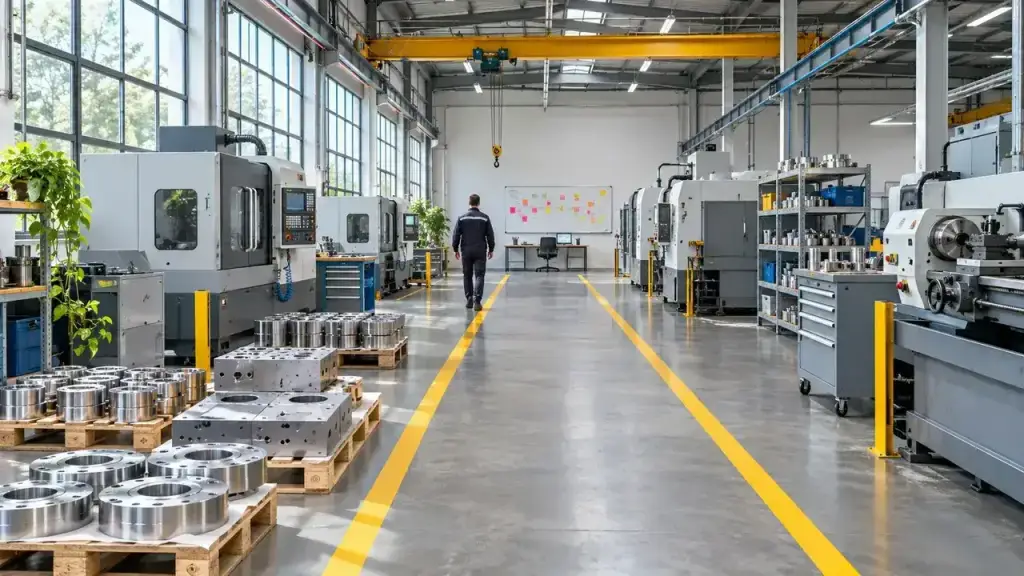
Your software is no longer enough when you recognise two of these three signs: a parallel file, a distinctive process running outside the system, a number that takes days to arrive. You can spot them in two minutes, with two questions to the right people.
First: a parallel file. Somewhere there is an Excel sheet, a notebook or a chat holding data that should live in the system. Ask the people doing the work, not their managers: "what do you open in the morning besides the system?"
To judge when that sheet should be replaced with a real system, a few calculations on lost time are enough. If you recognise it, the company has already paid to build a piece of custom software, with the wrong tool.
Second: the process that sets you apart runs outside. Ask which activity makes customers choose you over a competitor: how you configure a made to order product, how fast you answer a complex quote request.
If it runs inside the system, you are fine. If it runs in people's heads, in email and in a spreadsheet, your competitive edge rests on the one part of the system nobody designed.
A package can never contain it: it is built on the common denominator of thousands of companies, and if it contained your edge, your competitors would have it too. This is the number one candidate for custom.
Third: the data is there, but it arrives late. Ask for the margin per job for the last quarter and time the answer.
If it is "I will have it for you Thursday", the data exists but is not available: it only reaches the monthly meeting, when instinct has already decided.
Here you often do not need a new system, you need a way to read what the existing one already holds, and artificial intelligence in smaller companies now offers new tools for exactly that.
It is the cheapest intervention of all, and almost nobody proposes it, because it is worth little to the seller.
How much does custom business management software cost?
Custom business management software costs 20,000 to 45,000 euros for one or two processes, 45,000 to 90,000 for a whole area, and over 90,000 to replace everything. These are orders of magnitude for the Italian market, not a price list.
20,000 to 45,000 euros: one or two bounded processes, integrated with the system you have. The outsourced operations from the example, a quote configurator, a portal where customers see the status of their orders.
45,000 to 90,000 euros: a whole area, such as all of production or all of logistics, with several departments, historical data to migrate and twenty or thirty people. Here the outcome depends on how much time your people can give it.
Over 90,000 euros: custom replaces the system, accounting included, or becomes a product you offer to customers. It is a different trade: I worked in it, building and later selling a product for law firms.
The right question is not what it costs, but whether the company wants to enter the business of owning software.
Inside each band the price moves for four reasons: the integrations, the historical data to move, how many people use it, and where it has to work, only in the office or also on phones and on the shop floor.
Historical data is often a fifth of the project, and in optimistic quotes it gets half a line.
The four reasons apply when choosing a software house too: ask each one how it handles integrations, data and training. If you are thinking of doing it with your own people, the sum changes, because a development team has its own costs and thresholds.
Rebuild everything, or replace only the parts that work badly?

Rebuilding everything is almost never necessary. The right question is not "package or custom" but which processes deserve software you own, and which do not. In the vast majority of Italian companies I have seen, it is two or three, not thirty.
The package stays the cash register of the company: customer records, orders, invoices, accounting, basic stock. On top and alongside it, you build custom only the two processes that generate margin and that the package does not contain.
For the example company: the outsourced operations, today in Excel, and the reading of data that today arrives on Thursday.
It pays for three reasons. It costs a fraction: you are in the entry band. It takes months: three or four, against twelve to eighteen for a full replacement. It throws nothing away: accounting keeps working and the risk stays within one area.
Recommending this loses me the biggest contract, which is why the advice you usually get is the rebuild: it is the work the person advising you knows how to do. I prefer a client who trusts me.
In the Visual Basic 6 to .NET migrations I have followed, what saved the most was to modernise the software already there, one piece at a time.
There is also an argument comparison sites never make: software you own is an asset of the company, a subscription is a cost. Whoever buys a company looks at how much its operation depends on specific people.
The same process on controlled, transferable software is worth more than one living in an Excel file: that is what makes software an asset on the balance sheet.
How do you combine a package and custom software without two versions of the truth?

Combining a custom piece with a package takes three rules: one owner for every piece of data, one place for the person working, a package that can be read from outside. The risk is two systems saying different things.
The first rule: every piece of data has one owner. The customer record is created in the package and the new piece reads it without duplicating it.
The status of an outsourced job is created in the custom piece and the package reads it to invoice.
If you do not write this down before you start, after six months you have two slightly different customer lists and nobody knows which one is right.
The second: the person working sees one place. The integration has succeeded when they do not need to know there are two systems.
If they open two programs and copy a code from one to the other, you have moved the Excel file, not removed it.
The third: the package lets itself be read. Not every package lets you read and write its data from outside with the same ease: some document it, some charge for it, some make it complicated.
Before signing, ask the vendor: can I have my own software read and write my data, how, and at what price? If the answer is no, that package is not a part of your system: it is a cage.
The three rules cost little if you write them before you start and a lot if you discover them later. Cleaning up data once a project is under way weighs as much as a part of the project.
When is custom the wrong choice?
Custom is the wrong choice in four cases, and I almost always spot them in the first half hour of a conversation: the process is not stable, nobody can follow the project, the problem is organisational, a mature vertical already exists.
The process is not stable. If it has changed three times in a year or you are about to change market, you are setting in concrete something still moving. Stabilise it first, even by hand, then build it.
Nobody can follow the project. You need one person inside who knows the process, has the authority to decide and gives a few hours a week. Without them the project fails whoever builds it: it is the most frequent cause of failure I know.
The problem is organisational. Two departments do not talk to each other and you ask for software to make them talk. It will be delivered, and they will go on not talking, with a new program. No tool fixes responsibilities that were never assigned.
A vertical already exists. Before commissioning anything, check whether a package built for your trade exists. If it is mature, it holds most of what you were about to have written from scratch, and costs a fraction.
The check takes two days: it is the least profitable advice I can give, and it is the right one.
If you recognise yourself in one of these cases, it is not a rejection. It means the first right spend is not software: it is fixing the process, finding the person in charge or clarifying which problem you are trying to solve.
How do you decide in a week without calling five vendors?
To decide in a week you need five questions for the people who use the system every day, not their managers.
Managers describe the process as it should be, the people doing the work describe it as it is: the gap is almost always the project.
The five questions:
- What do you open in the morning besides the system? List every file, chat and notebook, with the name of whoever keeps it.
- How much time a day do you spend retyping or checking data the system already has? Add up the minutes of everyone and turn them into euros.
- What do you ask the system for that it cannot do? Answers repeated across departments are your priorities.
- Which number do you need and have to ask someone for? Every request is data the system does not deliver.
- If the system disappeared tomorrow, what could you no longer do? It stops you throwing away a system that works better than it seems.
Put the answers in two columns: on the left accounting, invoicing and records, on the right everything else. If the right is full, you have the list of candidates for custom. If it is nearly empty, use what you have better.
Then add the minutes from question 2 to subscriptions and modules. Above 30,000 euros a year, the conversation is about which two processes to bring in. Below it, about how to spend better what you already pay.
If you keep only one sentence: the right question is not what the system costs, it is what you spend doing by hand what the system does not do. In most of the companies where I have calculated it, that number exceeds the subscription.
The administration manager from the opening does not need new software: she needs someone to work out what her Excel file costs. Now you know how to do that calculation.
If your numbers sit above the threshold, or your answers fill the right hand column, send me the cost lines of your system and in a half hour call I will tell you where you stand and what moving would cost, with nothing to sell.
Does your company need custom software or AI in the team?
We design and build custom software, modernize legacy systems and train your developers to work with AI. Tell us the problem: you get a concrete answer within one working day.
Frequently asked questions
It is worth it when the total annual cost of your current system exceeds 30,000 euros. Below that, the package almost always wins: it starts in weeks, costs little and updates itself. Above it, custom pays back in two or three years. The total must include the hours people spend patching by hand: they are the biggest item and appear nowhere in the accounts.
Twenty to forty five thousand euros for one or two well bounded processes integrated with the existing system, where most sensible projects sit. Forty five to ninety thousand for an entire area of the company. Over ninety thousand when it replaces everything or becomes a product for customers. The price moves with integrations, historical data to migrate, number of users and where the software must work.
If you recognise two signs out of three, the package is no longer enough. First: somebody keeps a parallel spreadsheet with data that should live in the system. Second: the process that sets you apart runs outside the system. Third: a number the company already holds takes days to arrive. The question that surfaces all three, asked of the people doing the work: what do you open in the morning besides the system?
Replacing everything is almost never necessary, and it is the most expensive mistake available. The hybrid approach works: the package stays for accounting, invoicing and tax obligations, and you build custom only the two or three processes that generate margin. It costs a fraction, takes three or four months rather than a year and a half, and throws nothing away.
Two hours a day for one person, over 220 working days, is 440 hours a year: at 25 euros an hour of fully loaded cost, 11,000 euros. In a forty employee company at least two people are usually patching, so 22,000 euros a year. On top come errors from retyped data, late decisions and dependence on the one person who knows the parallel file.
In four cases. When the process is not stable yet, because you would fix in place something still moving. When nobody inside can follow the project, the most frequent cause of failure. When the problem is organisational and is being called a software problem. And when a mature vertical package already exists for your industry, holding most of what you were about to commission from scratch.
Three rules. Every piece of data has one place where it is created and changed, and other systems read it from there: otherwise you end up with two different customer lists in six months. The person working must see one place only, or you have just moved the spreadsheet. Before signing, check the package can be read and written from outside: if not, it is a cage.
Leave your details in the form below